

Flickering lights are usually caused by a loose or failing bulb, an LED that does not suit its dimmer, or the network's ripple control signal in the evening. Flicker across the whole house, or lights that dim when big appliances start, can mean a loose connection or overloaded circuit, which needs an electrician.
Start with where the flicker happens and when.
Quick check: what your flicker is telling you
- One light flickers: most likely the bulb, the fitting or the switch.
- Lights on one dimmer flicker: almost always a dimmer and LED mismatch.
- LED lights flicker briefly at the same time most evenings: probably ripple control from the network.
- Lights dim or flicker when the oven, heat pump or washing machine starts: a heavy load on the circuit or a supply issue.
- Lights all over the house flicker or brighten and dim at random: a possible loose connection at the switchboard, meter or service line. Treat this one seriously.
- Your neighbours' lights flicker too: likely a network problem. Check Vector's outage map or call your lines company.
Common causes of flickering lights
1. A loose or failing bulb
The simplest cause. Turn the light off, let the bulb cool, and check it is seated firmly. If it still flickers, try a new bulb. LED bulbs often flicker as their internal electronics fail, so flicker followed by the bulb dying is common and not a wiring fault.
2. LED bulbs on the wrong dimmer
This is the most common cause we see in Auckland homes that have swapped old halogens for LEDs. Problems include:
- non-dimmable LED bulbs on a dimmer circuit
- dimmable LEDs on an old dimmer designed for incandescent or halogen bulbs
- too few LEDs on the circuit for the dimmer to work properly, because many dimmers need a minimum load
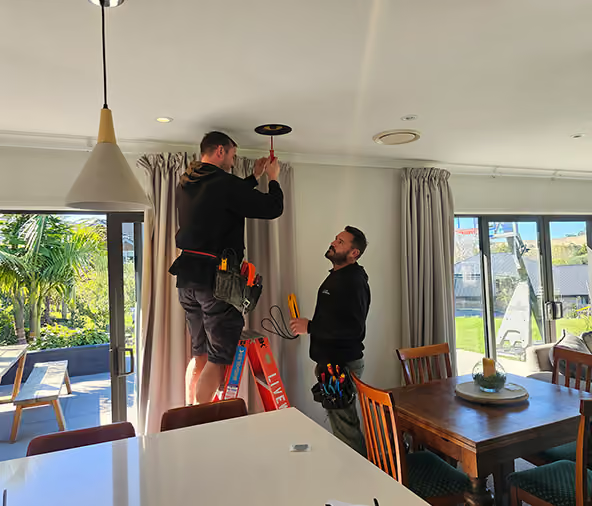
The fix is matching the bulbs and dimmer, often by replacing the dimmer with an LED-compatible one. Swapping a dimmer means working on fixed wiring, so get an electrician to do it. If your fittings are old halogen downlights with LED bulbs pushed in, replacing them with proper LED downlights usually solves the flicker and gives better light.
3. A failing LED driver or fitting
Many LED downlights and strip lights use a driver, a small power supply that sits in the ceiling. When a driver starts to fail, the light may flicker, strobe, or take a while to come on. Old fittings with heat-damaged lamp holders cause similar symptoms. The driver or fitting needs replacing.
4. Ripple control (the evening flicker)
This one catches a lot of people out. Lines companies in New Zealand use ripple control: they send a signal over the power lines, usually at 750 or 1050 hertz, to switch hot water cylinders and street lights on and off and manage peak demand. Some LED drivers pick up that signal as noise and flicker for 30 seconds to a couple of minutes while it is being sent, often around the same times each evening.
Nothing is wrong with your wiring. The usual fix is a ripple signal filter fitted at the switchboard, or replacing the affected lights with ones that have better quality drivers. An electrician can confirm whether ripple control is the cause.
5. A faulty or worn light switch
A switch with worn contacts can make a light flicker when you touch it or when nearby doors slam. If the switch crackles, feels warm or has scorch marks, stop using it and get it replaced.
6. Big appliances starting up
A brief dip when a heat pump, oven element or vacuum cleaner kicks in can be normal, especially if the lights share a circuit or the house is a long way from the transformer. Regular, obvious flicker every time an appliance starts is not normal. It can point to an overloaded circuit, an undersized supply or a loose connection somewhere. An electrician can measure what is happening.
7. Loose connections in the wiring
Loose connections at switches, light fittings, junctions or the switchboard cause flicker, and they are the cause to take most seriously. A loose connection heats up every time current flows through it, and that heat can damage insulation and start a fire.
Watch for a loose neutral. If the neutral connection at the switchboard, meter or service line works loose, voltages in the house swing up and down. Lights get brighter and dimmer, appliances behave strangely, and electronics can be damaged. If you see that pattern, call an electrician straight away, and if it affects the street, your lines company.
8. Old or damaged wiring
Older Auckland villas and bungalows can still have rubber-insulated cable or wiring that has been added to many times over the decades. Brittle insulation and tired connections lead to intermittent faults, including flickering lights. A wiring check will show whether repairs will do or whether rewiring the affected circuits is the safer option.
Are flickering lights dangerous?
Sometimes. A dying bulb, a dimmer mismatch or ripple control flicker is annoying but not dangerous. Loose connections, overloaded circuits and failing wiring are fire risks.
Treat flickering as urgent if it comes with any of these:
- a burning smell, or heat at a switch, socket or the switchboard
- buzzing or crackling from switches, fittings or the switchboard
- scorch marks or discolouration on switches, sockets or light fittings
- lights getting noticeably brighter as well as dimmer
- breakers tripping, or appliances failing at the same time
- flicker throughout the house that you cannot link to anything
If any of these happen, turn off the affected circuit or the main switch if it is safe to do so, and call an electrician.
What you can safely check yourself
- Turn the light off and check the bulb is screwed or pushed in firmly.
- Swap in a new bulb, ideally a known good one.
- Check whether the bulb is marked as dimmable if it is on a dimmer.
- Note when the flicker happens: what time, which lights, and what else is running.
- Ask the neighbours whether their lights are doing the same.
Those notes help your electrician find the fault faster.
Anything past the bulb is a job for a licensed electrician. In New Zealand, work on fixed wiring is prescribed electrical work. A limited owner-occupier exemption exists under the Electricity (Safety) Regulations 2010 (regulation 57), but it excludes switchboard work, and wiring done under it must be tested and connected by a licensed inspector. Tracing a loose connection means opening up live equipment, so leave it to us.
How an electrician fixes flickering lights
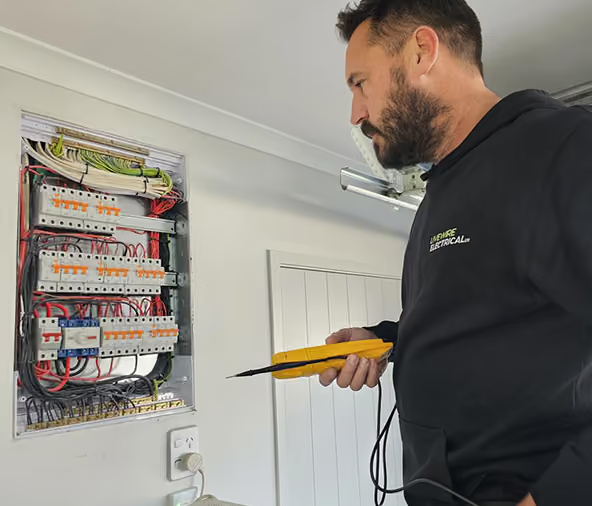
We start by working out whether the problem is the light, the circuit, the switchboard or the supply. That can mean checking connections at switches and fittings, testing the voltage over time, inspecting the switchboard for loose or heat-damaged terminals, and checking the dimmer and LED setup.
The fix might be as small as a new dimmer or driver. If the switchboard is old, overloaded or showing heat damage, a switchboard upgrade fixes the problem and adds modern RCD protection at the same time. Our guide to how your home electrical system works explains how the switchboard and circuits fit together.
When to call an electrician
- The flicker continues after you replace the bulb.
- Several lights or the whole house flicker.
- Lights dim heavily or flicker when appliances start.
- You notice heat, buzzing, a burning smell or scorch marks.
- Your LED lights flicker on dimmers or in the evenings and you want it sorted.
Livewire's registered electricians diagnose flickering lights across West, North and Central Auckland.
Frequently asked questions
Why are my lights flickering in the whole house?
Whole-house flicker usually comes from a loose connection at the switchboard, meter or service line, a heavy load affecting the supply, or a problem on the network. If your neighbours have it too, call your lines company. If it is only your house, call an electrician promptly.
Do flickering lights mean an electrical problem?
Not always. A loose or failing bulb, a dimmer mismatch or the evening ripple control signal are common harmless causes. Flicker that affects several lights, comes with heat or buzzing, or persists after a bulb change does point to an electrical problem.
Are flickering lights a fire hazard?
They can be when the cause is a loose connection, overloaded circuit or damaged wiring, because those faults generate heat. Get any persistent or widespread flicker checked by an electrician.
Do LED bulbs flicker when they are dying?
Yes. As the electronics inside an LED bulb fail, it often flickers or strobes before it stops working. If a new bulb fixes the flicker, that was the cause.
Why do my LED lights flicker at the same time every night?
That pattern usually points to ripple control, a signal the lines company sends to switch hot water cylinders. Some LED drivers react to it. An electrician can fit a ripple filter at the switchboard to stop it.
How do I stop my LED lights flickering on a dimmer?
Check the bulbs are marked dimmable, then have an electrician fit an LED-compatible dimmer that suits the number of lights on the circuit.