


Test and tag in Auckland, plus RCD, emergency lighting and switchboard testing
Ongoing electrical compliance protects the safety of a building and its insurance cover. Scheduled testing catches problems before they become incidents, with a written report on file every time.
Test and tag in Auckland with Livewire Electrical costs $6.50 per tag for 10 or fewer appliances, $5.50 per tag up to 100, and $4.80 per tag over 100, confirmed in a fixed quote before the visit. The same visit can cover RCD trip testing, thermal imaging of switchboards and emergency lighting discharge tests, with a written report and Certificate of Compliance on file.
How a compliance visit runs
Booked around your operating hours.
Count and quote
We confirm the number of appliances and the tests you need, then fix the price.
Test on site
Each item is inspected, tested and tagged with its next due date.
Fix or flag
Failed items are repaired on the spot where possible, or we tell you what to replace.
Report on file
You get the register, the report and the Certificate of Compliance for your insurer.
What a maintenance visit covers
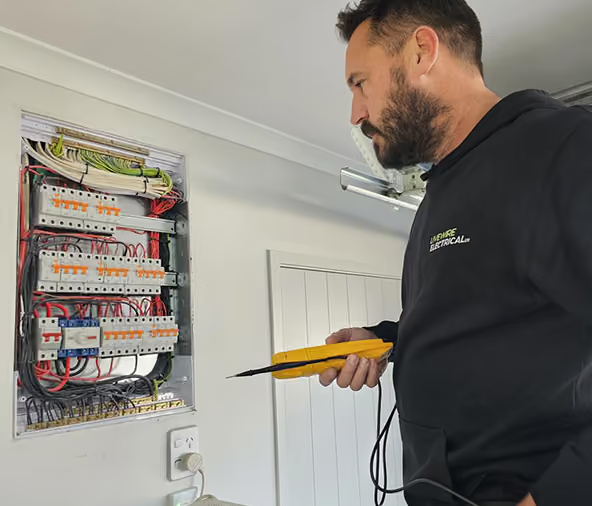
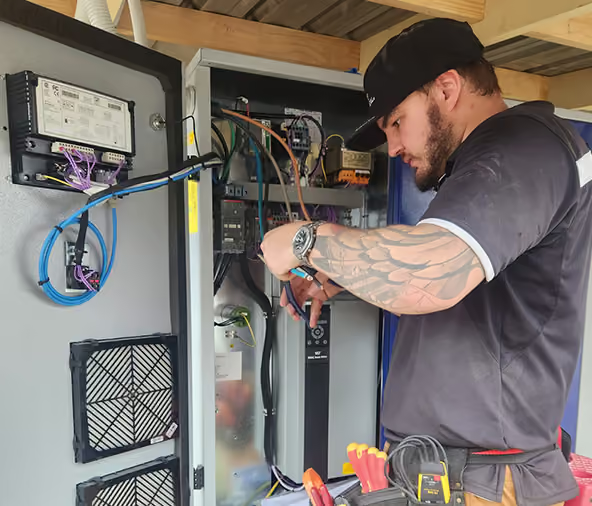
RCD trip-time testing, thermal imaging of switchboards, test and tag of portable appliances, switchboard inspection and emergency lighting discharge testing, with a written report after every visit.
RCD, thermal imaging and emergency lighting in one visit
Digital asset register and re-test schedule
Why Livewire for compliance testing
Registered electrical contractor, fully insured.
Prices published
Per-tag rates by volume, confirmed in a fixed quote before the visit.
Nothing missed
A digital register and re-test schedule keep every item on cycle.
Flat monthly plans
Annual plans spread the cost evenly and lower the ad-hoc rate.









FAQs
Got questions? We've answered the most common ones here.
Do you provide a test and tag report?
Yes. You get a digital register of every item tested with the date, result, asset ID and next test due date. Multi-site businesses get one consolidated report and invoice for the portfolio.
Is test and tag legally required in New Zealand?
Test and tag is not strictly mandatory under NZ law, but employers have a duty under the Health and Safety at Work Act to ensure portable electrical equipment is safe. Test and tag is the standard way to demonstrate that compliance, and insurers and landlords increasingly expect to see the records.
How often does test and tag need to be done?
Frequency depends on the environment. Under AS/NZS 3760, office equipment is typically tested every two years, construction sites every three months, and hospitality every six to twelve months. Livewire's asset register records the next due date for every item so re-tests are scheduled automatically.
Do you offer annual maintenance plans, and how are they priced?
Yes. An annual maintenance plan bundles the year's scheduled testing (RCD, thermal imaging, test and tag, switchboard inspections) into one annual cost, then spreads that total into an equal flat monthly payment rather than one large invoice. Being on a plan also unlocks a lower ad-hoc hourly labour rate for any additional work outside the scheduled visits. Get in touch to talk through your building's requirements and we will put together a plan.
How much does test and tag cost?
Test and tag pricing is volume-based: $6.50 per tag for 10 tags or fewer, $5.50 per tag for up to 100 tags, and $4.80 per tag for more than 100 tags. The exact figure is confirmed as part of a fixed quote before the visit, based on the actual number of appliances on site.
Do you provide test and tag services for portable appliances?
Yes. Test and tag covers portable appliances such as kettles, extension cords and power tools, checked for electrical safety and tagged with the test date. It is commonly required for workplace health and safety compliance, and Livewire maintains an asset register so re-tests happen on schedule without you having to track them.
What is the difference between electrical verification and certification?
Verification is the actual testing process confirming the work meets safety requirements. A Certificate of Compliance is the paperwork issued once that testing is done. Verification is the how, certification is the proof it happened, and a business should never accept the certificate without confirming the underlying testing genuinely took place.
What ongoing maintenance programmes are available for commercial buildings?
Ongoing commercial maintenance usually covers scheduled RCD and emergency lighting testing, switchboard inspections, and thermal imaging to catch overheating connections before they fail, bundled into one maintenance arrangement rather than a string of one-off callouts. For a facilities manager, a documented maintenance history also doubles as evidence of due diligence if an insurance claim or incident review ever comes up.
What are the consequences of non-compliant commercial electrical systems in NZ?
Non-compliant commercial electrical systems are a genuine safety risk, and can void insurance cover outright if there is a fire or electrical incident, regardless of any regulatory penalty on top. Proactive compliance testing is consistently cheaper than remediation after something has gone wrong, and insurers are asking for compliance documentation as a condition of cover more often than they used to.
What is involved in a commercial electrical compliance audit?
A compliance audit means a licensed electrician working through the switchboard, wiring condition, RCD and earthing performance, emergency lighting and any specialist systems against current safety requirements, then handing over a written report flagging anything non-compliant. Have prior COCs and maintenance records ready before the audit. Missing documentation gets flagged just as often as an actual physical fault.
How often do commercial buildings in NZ need electrical inspections?
There is no single fixed interval that applies to every commercial building. Frequency depends on use, and often on what your insurer or landlord specifically requires. Periodic testing of RCDs, emergency lighting and fire systems is standard practice regardless. Higher-risk environments such as commercial kitchens, workshops and retail running heavy equipment generally warrant more frequent checks than a standard office tenancy.
What is a Certificate of Compliance (COC) for commercial electrical work in NZ?
A Certificate of Compliance (COC) is the official record confirming electrical work was completed safely and to New Zealand's electrical safety requirements, issued by the licensed electrician who did or supervised the work. Keep a COC on file for every piece of commercial electrical work. They are requested constantly for insurance, building sales and lease compliance.
Related services
Explore other services we provide across Auckland.
Based in Kumeū, working across Auckland
Fastest response across Huapai, Riverhead, Waimauku, Whenuapai and Hobsonville. Auckland-wide for rewires, switchboards, EV chargers and commercial work.


Get a fixed quote
Tell us about the job. You get an itemised price before any work starts, and we reply within one business day.