

Electrical grounding, called earthing in New Zealand, connects the metal parts of your wiring and appliances to the earth through a copper earth wire and an earth electrode. If a live wire touches metal, the fault current takes that path, the circuit breaker or RCD trips, and nobody gets a shock.
Americans say grounding, Kiwis and Brits say earthing. Same thing. (If you came here for earthing mats and walking barefoot on the lawn, that is a different topic altogether. This page is about your wiring.)
What is electrical grounding?
Every circuit in your house has three conductors. The active (or phase) carries power out to the light or socket. The neutral carries it back. The earth wire does nothing at all while things are working properly. It sits there, connected to every metal light fitting, every metal appliance case and the earth pin of every power point, waiting for something to go wrong.
When something does go wrong, say a worn cable inside a heater lets the active touch the metal case, the earth wire gives that current a low-resistance path away from you. A large current flows almost instantly, and that is what trips the protection on your switchboard.
Without an earth, the heater case would sit at 230 volts until someone touched it. Then their body would be the path.
Why is grounding important?
Earthing on its own does not switch anything off. It works as a team with two devices on your switchboard:
- Circuit breakers or fuses. A fault to earth draws far more current than the circuit is rated for, so the breaker trips or the fuse blows. Earthing is what makes that current big enough, quickly enough.
- RCDs (residual current devices). An RCD compares the current going out on the active with the current coming back on the neutral. If more than about 30 milliamps goes missing, for example through the earth wire or through a person, it cuts the power in a fraction of a second.
So a good earth turns a dangerous fault into a tripped switch and a bit of inconvenience. A poor earth can leave metal parts live with nothing tripping.
How earthing works in a New Zealand home: the MEN system
New Zealand homes use the MEN system, short for Multiple Earthed Neutral, set out in the joint wiring rules AS/NZS 3000. The main parts are:
- The earth electrode. Usually a copper-clad rod driven into the ground outside, close to your meter box or switchboard. Some older homes rely on other arrangements, which is one reason an inspection matters.
- The main earthing conductor. A heavy green or green/yellow cable running from the electrode to the earth bar in your main switchboard.
- The MEN link. Inside the main switchboard, the earth bar and neutral bar are joined at one point. This gives a fault a very low-resistance route back to the network, so breakers trip fast.
- Circuit earth wires. Each circuit runs an earth conductor out to its sockets and fittings. In modern cable it is green/yellow. In older New Zealand wiring it is plain green or bare copper.
- Equipotential bonding. Metal water pipes and some other metalwork are connected to the earthing system so they cannot sit at a different voltage from your appliances.
For context on the colours: older Kiwi homes use red for active, black for neutral and green for earth. Newer wiring uses brown, blue and green/yellow. You will often find both in one house after decades of renovations.
Grounding vs earthing vs bonding
These terms get mixed up online, mostly because so much of the content is American.
- Grounding and earthing mean the same thing: connecting the electrical system to the earth.
- Bonding means joining metal parts together, such as water pipes and the earth bar, so they all stay at the same voltage.
Both matter. Earthing gives fault current somewhere to go, and bonding stops you becoming the bridge between two bits of metal at different voltages.
Signs your home's earthing needs checking
You cannot see most of the earthing system, but a few things suggest a problem:
- Tingles or small shocks from a metal tap, shower mixer, appliance or metal light fitting. Treat this as urgent. Stop using the item and call an electrician.
- An RCD that trips for no clear reason, or one that never trips when you press its test button.
- A damaged, corroded or missing earth rod, or a main earth cable that has been cut by a lawnmower, a fence post or a landscaping job.
- Older wiring. We regularly find Auckland villas and bungalows where early lighting circuits have no earth wire at all, which matters once someone fits metal light fittings. Old rubber-insulated cable also turns brittle with age.
- Two-pin plugs on appliances that should have three, or adaptors that bypass the earth pin.
- Renovations done without a Certificate of Compliance. Earthing is one of the first things to go wrong in unlicensed work.
A cheap plug-in socket tester from a hardware store can show whether a power point has an earth connection, but it cannot measure how good that earth is. Proper earth testing needs an electrician's instruments.
How an electrician tests and fixes earthing
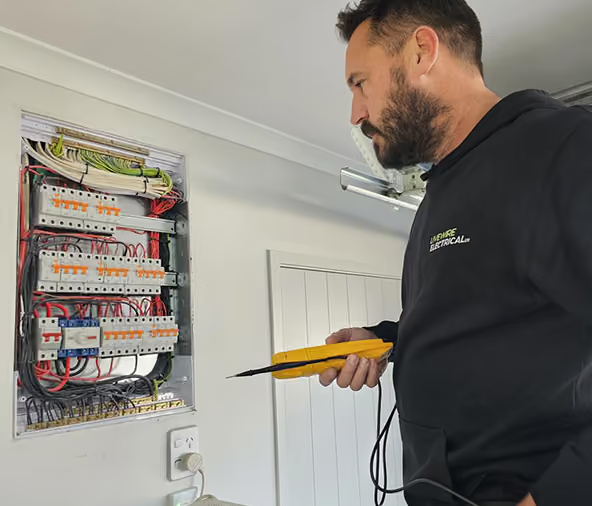
When we check earthing on a job, we look at:
- The earth electrode and its clamp, plus the condition of the main earthing conductor.
- The MEN link and earth bar in the switchboard.
- Earth continuity on each circuit, so every socket and metal fitting connects back properly.
- Bonding to metal water pipes where it is required.
- RCD operation, using a tester rather than just the test button.
Common fixes are replacing a corroded electrode or clamp, re-terminating loose earth connections, adding bonding, and running earth wires where they are missing. When earthing problems come with an old switchboard and no RCD protection, a switchboard upgrade is usually the sensible fix, because it brings in modern RCDs at the same time. When the circuits themselves have no earth wire or the cable is perished, the real answer is rewiring the affected circuits.
If you want to know how earthing fits with the rest of your setup, our guide to how your home electrical system works walks through it from the street to the switch.
Can I check or fix earthing myself?
Look, yes. Touch, no.
You can walk around outside and look for the earth rod near the meter box, check it has not been buried under a garden or cut, and press the test button on your RCDs every few months to make sure they trip.
Repairing or altering earthing is a different story. In New Zealand, work on fixed wiring is prescribed electrical work. It has to be done by a licensed electrician, who then certifies it. There is a narrow exemption for owner-occupiers under the Electricity (Safety) Regulations 2010 (regulation 57), but it does not cover switchboard work, and any wiring done under it has to be tested and connected by a licensed electrical inspector. Earthing runs through the switchboard, so it sits firmly on the electrician's side of the line.
When to call an electrician
Call a registered electrician if:
- you feel any tingle from a tap, appliance or fitting
- your RCD trips often or does not trip when tested
- the earth rod or main earth cable is damaged or missing
- you are buying an older home and want to know what you are dealing with
- you have had work done and never received a Certificate of Compliance
Livewire's registered electricians test and repair earthing for homes across West, North and Central Auckland. We can tell you whether you need a simple repair or something bigger.
Frequently asked questions
What happens if electrics are not earthed?
Nothing, until there is a fault. Then any metal part that becomes live stays live, and the breaker may not trip because the current has nowhere easy to go. The next person to touch it becomes the path to earth. An RCD gives some protection even then, but earthing and RCDs are designed to work together.
What is the difference between grounding and earthing?
There isn't one. Grounding is the American term and earthing is the term used in New Zealand, Australia and the UK. Both describe connecting an electrical system to the earth so faults can be cleared safely.
How can I tell if my house is earthed?
Look for an earth rod in the ground near your meter box or switchboard, with a green or green/yellow cable clamped to it. Three-pin power points should have a working earth, which a plug-in tester can confirm. For a proper answer on how good the earth is, an electrician needs to test it.
What is the MEN system?
MEN stands for Multiple Earthed Neutral. It is the earthing arrangement used in New Zealand homes, where the neutral and earth are joined at the main switchboard and connected to an earth electrode. It gives fault current a low-resistance path so protective devices trip quickly.
What are the signs of poor grounding?
Tingles from taps or appliances, RCDs that trip randomly or not at all, a missing or corroded earth rod, and older circuits with no earth wire. Any shock or tingle needs an electrician straight away.
Do I need an electrician to fix earthing?
Yes. Earthing work involves the switchboard and fixed wiring, which in New Zealand is prescribed electrical work for licensed electricians. The work also needs to be tested and certified.