

Childproofing electrical outlets means stopping small fingers and objects getting into live sockets. In NZ homes, use plug-in covers on unused power points, cover boxes over sockets with plugs left in, and shuttered sockets where you can. Keep power boards and cords out of reach, and make sure your circuits have RCD protection.
Most of the advice online is American, written for their outlets and their rules. Kiwi power points are different, so here is how we approach it when families ask us.
Why New Zealand power points need a different approach
A few things make our sockets their own case:
- They have switches. Almost every New Zealand power point has its own on/off switch. Switching it off cuts power to that socket, which helps, but toddlers learn to flick switches very quickly. Treat the switch as a backup, not the plan.
- Shutters are optional. Many current socket ranges from the major brands come with internal shutters that block the holes until a plug goes in. They are not required by New Zealand rules, though, and most older homes have plain sockets without them.
- Lots of sockets sit at skirting height. That is exactly where a crawling baby spends the day.
So the right setup depends on what is on your walls. Start by getting down on your hands and knees and counting every power point, power board and cord a child could reach. Plunket gives the same advice for the whole house: see it from their height.
The main childproofing options, compared
Plug-in covers (safety plugs)
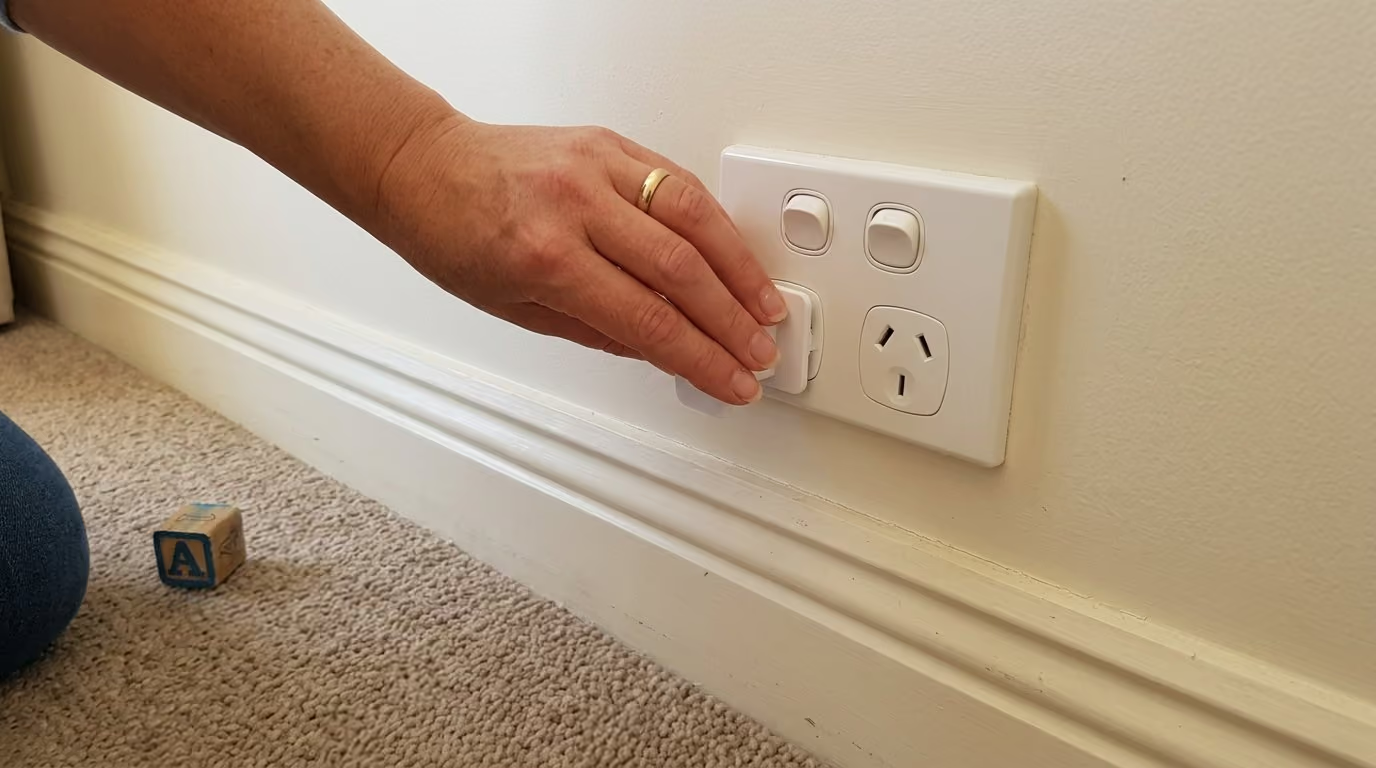
These are the plastic blanks that push into an unused socket. They are cheap, sold everywhere from the supermarket to Bunnings, and Plunket recommends power point protectors on unused sockets.
They have limits. A determined toddler can sometimes prise them out, a loose one is a choking hazard, and they are useless the moment you take one out to vacuum and forget to put it back. Buy covers made for the New Zealand and Australian three-pin socket, choose a type that needs a key or a firm grip to remove, and do a quick check now and then that every unused socket still has one.
Outlet cover boxes
A cover box screws or sticks over the whole power point and encloses it, with a slot for the cord to come out. This is the answer for sockets that always have something plugged in, such as the TV, the lamp beside the cot or the baby monitor. The plug cannot be pulled out and the switch cannot be reached.
Check the box suits New Zealand plates before you buy, because some imported boxes are sized for American outlets. Screw-fixed boxes hold up far better than adhesive ones.
Shuttered sockets
Shuttered sockets have spring-loaded covers inside that only open when both pins of a plug push in together. Poke a hairpin into one hole and nothing happens. In the US these are called tamper-resistant outlets, and they are required in new homes there.
In New Zealand, replacing a plain socket with a shuttered one is a job for an electrician. It is quick and tidy, and it means the protection is always there, with no covers to lose. If you are renovating or have a baby on the way, swapping the low sockets in the lounge, hallway and bedrooms is a sensible spend.
Sliding cover plates
Some plates have a cover that slides across the holes when the plug comes out. They work well, but they are less common in New Zealand ranges, so ask your electrician what is available to fit your existing boxes.
Power boards and multi-boxes
Power boards are often a bigger risk than the wall sockets. They sit on the floor, they have several open outlets, and they usually have a tangle of cords attached.
- Buy a power board cover box, or fit plug-in covers to every unused outlet on the board.
- Push boards behind heavy furniture so they cannot be reached or pulled out.
- Never plug one power board into another to get more outlets.
- Do not run heaters, kettles or other high-draw appliances from a multi-box. WorkSafe advises plugging those straight into the wall.
If you find you need several power boards in one room, that is a sign the room needs more sockets, not more boards. Adding power points is a straightforward job, and our rewiring team does it as part of bigger electrical upgrades. We also cover the safe way to use leads in our extension cord safety guide.
Cords, chargers and appliances
- Phone chargers left in the wall are a classic problem. A toddler can put the loose end in their mouth, so unplug chargers when you are not using them.
- Dangling cords from kettles, irons, hair straighteners and lamps can be grabbed and pulled down. Push appliances to the back of the bench and use cord shorteners or clips.
- Damaged cords with cracked or split insulation should be replaced, not taped.
- Heaters need a guard and a clear space around them, as Plunket also recommends.
Check your switchboard has RCD protection
Covers and boxes stop children getting into the socket. An RCD is what saves them if something gets through anyway, by cutting power in a fraction of a second when current leaks through a person.
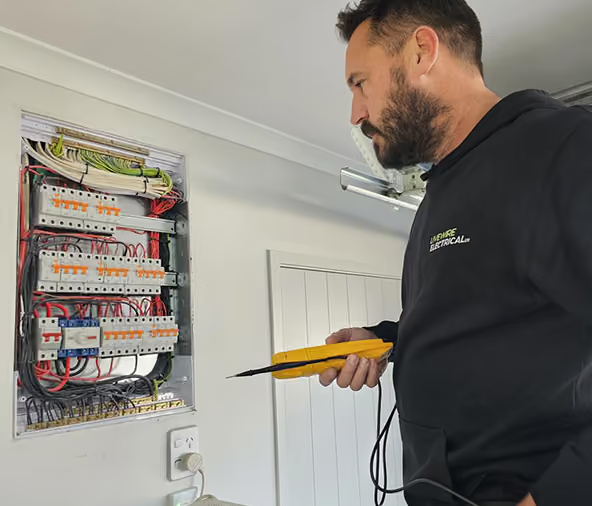
New circuits in New Zealand homes have to be RCD protected under the wiring rules, but many older Auckland houses have no RCDs at all, or only one covering part of the house. Look at your switchboard. RCDs usually have a "T" or "Test" button. Press it every few months, and it should trip.
If you cannot find one, get an electrician to look. Older homes with no RCDs often also have tired sockets and brittle wiring, and our residential electricians can tell you whether a few new sockets will do or the wiring needs bigger work.
What you can and cannot do yourself
Plug-in covers, cover boxes and cord management are all fine to do yourself. Replacing a socket is different. In New Zealand, work on fixed wiring is prescribed electrical work for licensed electricians. There is a limited owner-occupier exemption under the Electricity (Safety) Regulations 2010 (regulation 57) for replacing items such as socket outlets, but the work has to meet the code of practice, and new or altered wiring must be checked and connected by a licensed inspector. For most families, getting an electrician to swap the sockets is quicker and gives you a Certificate of Compliance.
When to call an electrician
- You want shuttered sockets fitted in the rooms your children use.
- A socket is cracked, loose in the wall, scorched or warm to touch.
- You are relying on power boards because there are not enough wall sockets.
- You cannot find an RCD on your switchboard, or it will not trip when tested.
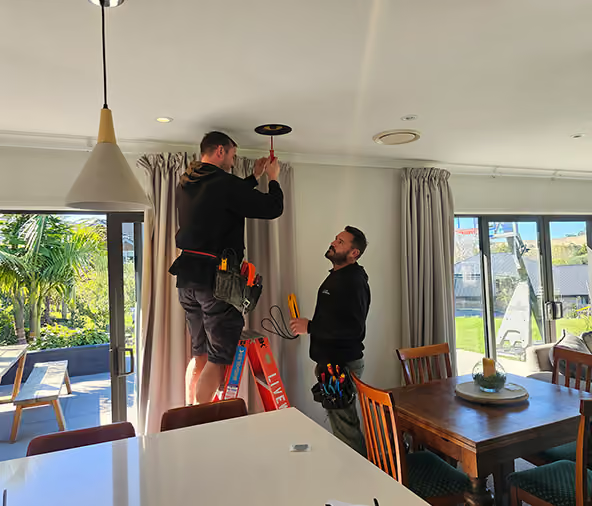
Livewire's registered electricians work across Auckland, from our base in Kumeū. We are happy to walk through the house with you and point out what matters.
Frequently asked questions
Are baby proof outlet covers safe?
Good quality plug-in covers that fit New Zealand sockets snugly are a reasonable first step. The risks are covers that come loose and become a choking hazard, and covers that never go back in. Shuttered sockets or cover boxes avoid both problems.
How can I baby proof power points that have things plugged in?
Use an outlet cover box. It encloses the whole power point and plug, leaves a slot for the cord, and stops a child pulling the plug or reaching the switch.
How do I stop a toddler turning power points on and off?
A cover box hides the switch. For unused sockets, a plug-in cover plus furniture in front of the power point works well. In rooms where this is a constant battle, shuttered sockets take the pressure off.
What are childproof electrical outlets?
They are sockets with built-in shutters that only open when both pins of a plug are pushed in at once. Americans call them tamper-resistant outlets. In New Zealand they are available from the major brands and an electrician can fit them in place of standard sockets.
Do outlets need to be baby proof?
There is no rule that says you must childproof your home's sockets, but any socket at a child's height is worth protecting. Small children explore with their fingers and mouths, and a plain socket at floor level is right in their path.
How do I baby proof power cords?
Keep cords behind furniture, use cord covers or clips along skirting boards, unplug chargers when not in use, and replace any cord with damaged insulation.